
Tax Codes & Classification
Standardize how your marketplace handles taxes with a dedicated tax code engine integrated into Mercur. Mercur’s Tax Code module lets you store, manage, and apply standardized tax classification codes for your products and categories. It is the foundation that external tax engines like Stripe Tax or jurisdiction-specific services use to decide which tax rules apply, without hard-coding logic per product.
How do you manage tax codes in Mercur
With the Tax Code module, you can:
- Store standardized tax codes that represent product tax categories.
- Map products and categories to the right tax codes.
- Integrate with external tax engines like Stripe Tax that use these codes to calculate rates.
- Support international commerce by aligning with HS codes and customs requirements.
- Keep a clean separation between tax classification (what it is) and tax rates (how much).
Instead of burying tax classifications in random metadata, you manage them in a dedicated module that the rest of your stack can trust.
Tax codes vs tax rates
It is important to distinguish the role of this module:
- Tax Code (this module)
- Classification code for a product type or category.
- Defines which tax rules should apply, depending on jurisdiction and engine.
- Managed centrally in the Tax Code module.
- Example: "txcd_20010000" for clothing, or HS codes for customs.
- Classification code for a product type or category.
- Tax Rate (external engine/configuration)
- The actual percentage or amount charged as tax.
- Calculated by tax providers (e.g., Stripe Tax) or jurisdiction-specific logic.
- Uses tax codes and location data to decide the correct rate.
- The actual percentage or amount charged as tax.
Mercur gives you the classification layer that your tax engine needs in order to do its job correctly.
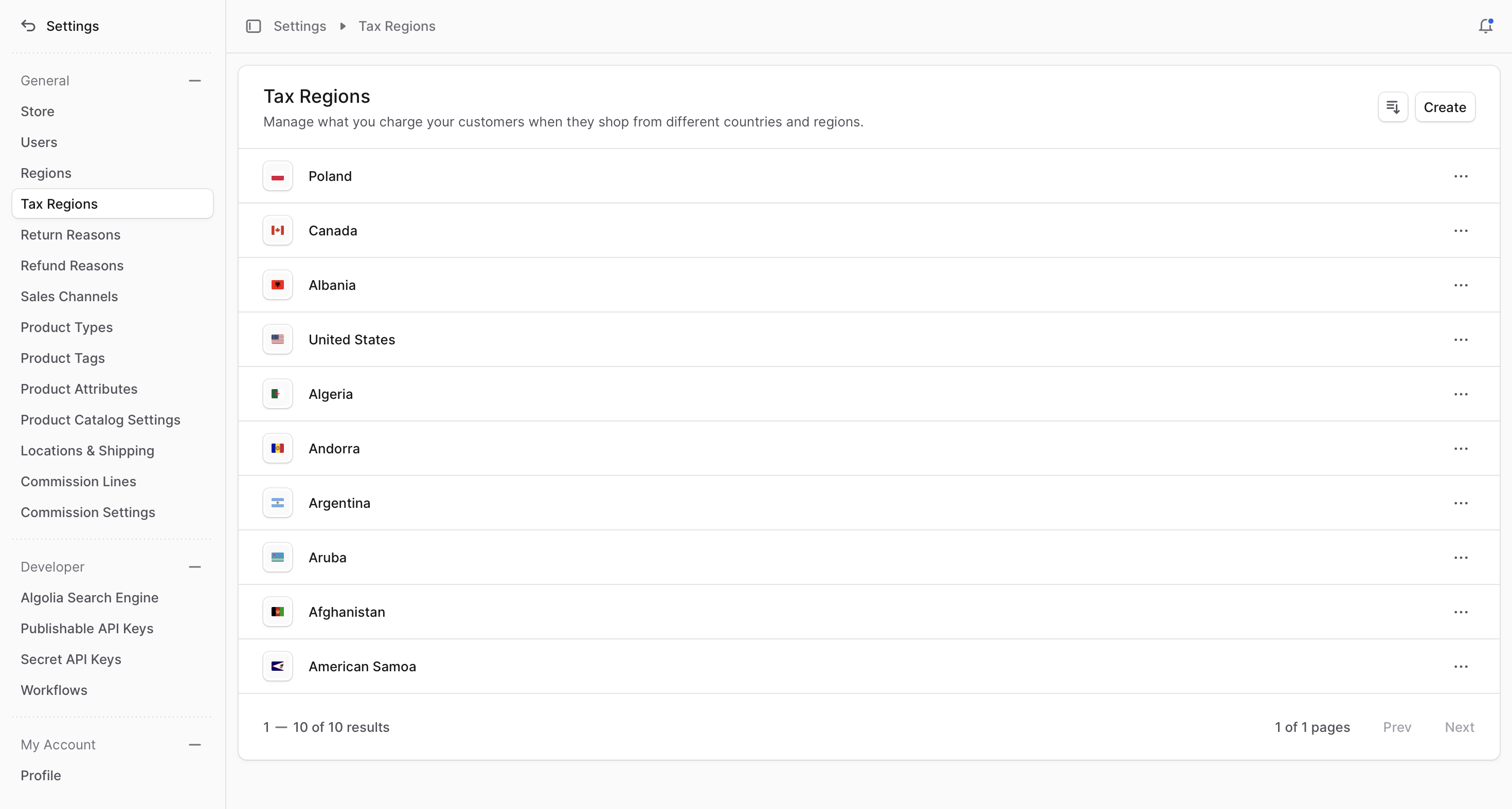
Tax Codes & Classification
video overview

Build custom marketplace with Mercur
Create your unique multi-vendor platform with our powerful, flexible marketplace solution that adapts to your business needs.
Core capabilities
1. Tax code storage
Keep all tax classifications in one structured place:
- Store tax codes that represent different product categories and tax behaviors.
- Add names, descriptions, and metadata so operators understand what each code means.
- Maintain a consistent catalog of codes used across products, categories, and integrations.
This avoids using free-form text or ad-hoc flags to describe tax behavior.
2. Mapping tax codes to products and categories
Make tax classification part of your catalog management:
- Assign tax codes to product categories, types, or individual products, depending on how granular you need to be.
- Ensure that every product in your catalog has an appropriate tax classification before going live.
- Use category-level mapping as a default, then override on specific products if needed.
When products move between categories, you can control whether their tax classification should follow or remain custom.
3. Stripe Tax integration
Use tax codes as the bridge to Stripe Tax:
- Sync your marketplace with Stripe’s tax code catalog so that each Mercur tax code aligns with a Stripe Tax classification.
- Let Stripe Tax use these codes, together with buyer and seller locations, to calculate accurate tax rates at checkout.
- Keep classification logic in Mercur while delegating rate calculation and compliance to Stripe Tax.
You get a clean division of responsibilities: Mercur handles classification, Stripe Tax handles the math and jurisdiction rules.
4. International commerce & HS codes
Prepare for cross-border sales and customs:
- Use tax codes to store HS codes or other international classification systems, where needed.
- Reuse these codes for customs declarations, shipping documents, and import/export processes.
- Make sure each product has the correct classification for the countries you operate in.
This is especially important for marketplaces that ship goods internationally and must comply with customs regulations.
5. Tax compliance & multi-jurisdiction support
Stay compliant when tax rules vary:
- Different jurisdictions tax the same product category differently (for example, clothing vs luxury goods, food vs alcohol).
- Tax codes give tax engines a standard way to understand what category a product belongs to, so they can apply the right rules for each country or state.
- Maintain proper tax records by having all products classified consistently, which is critical for audits and reporting.
By keeping classification central and explicit, you reduce the risk of misapplied rates and messy spreadsheets.

Build custom marketplace with Mercur
Schedule a guided tour of Mercur Marketplace tailored to your specific marketplace requirements. Connect with our team to discuss how we can help bring your marketplace vision to life.